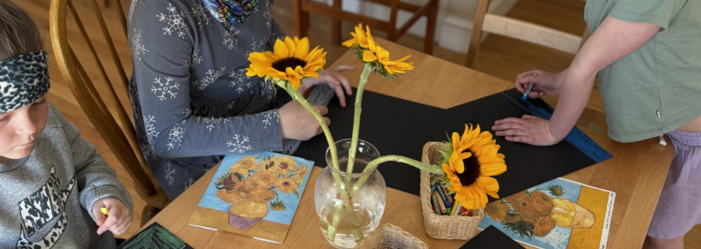
Authentic Montessori, Not Just Montessori-Inspired: Why It Matters
Authentic Montessori, Not Just Montessori-Inspired: Why It Matters
“Montessori” is everywhere now. It’s on school banners, daycare brochures, toy aisles, and social posts with tidy shelves and tiny brooms.
But the label doesn’t guarantee the method.
Picture a parent touring two programs with the same name on the sign. In the first room, children move calmly, choose their own work, and settle into deep focus. In the second, everyone rotates through adult-run stations on a timer, and the “materials” feel more like toys than tools.
That gap is why authentic Montessori matters. Montessori isn’t a look or a set of cute activities. It’s a whole system, with parts that depend on each other.
When you understand what makes a school authentic, you can choose with confidence, even if you’re skeptical. And for families exploring Sandwich Montessori School (SMS), this lens helps you see how a school can honor Maria Montessori’s principles while meeting today’s children.
This post will show what authentic Montessori looks like, why it matters in daily life, and what to ask when you tour.
What authentic Montessori really means (and what “Montessori-inspired” often misses)
Authentic Montessori starts with a simple belief: children are capable. They’re not empty cups waiting to be filled. They’re builders, shaping their minds through movement, practice, and choice.
In plain language, authentic Montessori is built on four big ideas:
Respect for the child: Adults speak to children with calm, clear language, and take their needs seriously. Respect shows up in small moments, like waiting instead of interrupting, and giving time to finish a thought.
Independence: Children learn to do things for themselves, not because it’s trendy, but because it builds dignity. “Help me do it myself” is more than a slogan, it’s a daily plan.
Self-directed learning: Children choose meaningful work, repeat it, and grow through effort. The teacher isn’t the center of the room, the child’s activity is.
Freedom within clear limits: Children have real choice, but not chaos. The room has routines, expectations, and boundaries that keep everyone safe and respected.
A Montessori-inspired program may borrow the surface, like wooden shelves, neutral colors, and a few familiar materials. That can be a good start, but it’s not the same as a full Montessori system.
When key parts are missing, the method loses its power. A shortened work cycle breaks concentration. Single-age classes reduce peer learning. Untrained adults may step in too fast, turning independence into dependence.
In authentic Montessori, everything works together: the environment, the schedule, the materials, the teacher’s training, and the child’s freedom. Take away one piece, and the whole experience changes.
The non-negotiables you can actually look for
You don’t need to be an expert to spot core Montessori elements. A few features are visible the moment you step inside.
Montessori-trained lead guides: Look for AMI or AMS credentials, or training from a MACTE-accredited program. Training matters because Montessori teaching is a specific craft, not a general “nice with kids” skill set.
Multi-age classrooms: Authentic Montessori typically groups children in 3-year spans (for example, ages 3 to 6). This supports leadership, peer modeling, and a natural rhythm of being new, then capable, then helping others.
An uninterrupted work cycle: A hallmark of Montessori is a long, protected block of time for work, often about 2.5 to 3 hours. That’s when children can choose, begin, persist, and complete, without constant resets.
A prepared environment with sequenced materials: The room is arranged for independence and order. Materials aren’t random activities, they’re part of a careful progression that moves from concrete to abstract.
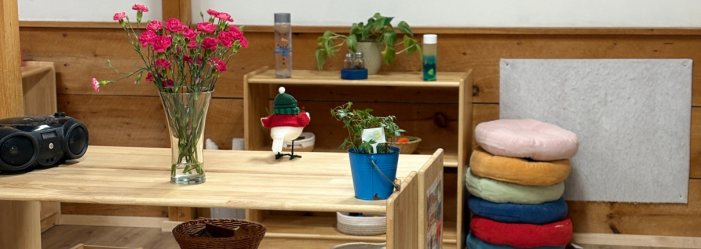
The phrase “prepared environment” can sound fancy, but it’s easy to recognize. Child-sized tables. Tools children can actually use. Shelves with space between materials. A place for everything, and a clear routine for returning work when finished.
A simple way to tell the difference when you walk in
Authentic Montessori has a certain feel. It’s not silent, but it’s steady. There’s a calm hum of work, like a library mixed with a workshop.
You’ll see children moving with purpose. A child rolls out a rug, carries a tray with two hands, and chooses a spot that doesn’t interrupt anyone else. Another child repeats the same work again, not because they’re bored, but because their brain is building something.
You’ll also notice the adults. In authentic Montessori, guides don’t hover. They observe, take notes, give brief lessons, and step back. Maria Montessori captured this perfectly: “The greatest sign of success for a teacher is to be able to say, ‘The children are now working as if I did not exist.’”
In many Montessori-inspired spaces, the shortcuts are easy to spot once you know what to watch for:
- Too many whole-group lessons, where everyone does the same thing at the same time
- A work period cut into pieces by frequent transitions
- Materials treated like entertainment instead of skill-building tools
- Adults directing “centers” and deciding what each child should do next
The room may still be pretty. But the child’s experience is different.
Why authentic Montessori matters for your child’s daily experience
Parents often hear big promises about Montessori: better grades, stronger leadership, future success. Those claims can feel fuzzy, especially if you’ve seen trendy programs come and go.
The real proof of authentic Montessori is much simpler: it changes what a child’s day feels like.
In an authentic classroom, children practice attention every morning. They practice self-control every time they wait for a material. They practice confidence when they choose work, start it on their own, and finish it without a sticker or a prize.
This is not “hands off” parenting in school form. It’s structured practice in real skills, taught in a way that makes sense to children.
Because the method is consistent, it supports the whole child at once:
- Academic growth through sequenced, hands-on materials
- Social growth through multi-age community and daily cooperation
- Emotional growth through calm routines and respectful limits
- Moral growth through responsibility, care of the environment, and repair after conflict
When Montessori is only inspired by the idea, the day can become busy and choppy. Children may try a little of everything, but rarely sink into deep work long enough to feel true ownership.
Independence that’s taught on purpose, not hoped for
Independence doesn’t appear because adults step back and cross their fingers. In authentic Montessori, it’s taught in small, repeatable steps.
A child chooses work, carries it carefully, sets it up, and begins. They concentrate, problem-solve, and correct mistakes with the help built into the material. Then they complete the work, restore it, and return it to the shelf. The next day, they choose it again, or move forward.
That cycle builds a quiet kind of strength.
Imagine a child working with a pouring activity. The water spills. In some settings, an adult rushes in to “save” the moment. In authentic Montessori, the child is shown where the sponge is, how to wipe, and how to try again. The message lands in the body: mistakes are normal, and I can handle them.
Over time, children don’t just act independent. They feel capable.
Real mastery, not just exposure to a lot of activities
A classroom can look impressive and still feel shallow. Lots of activities. Lots of cute projects. Lots of “we did this today.”
Authentic Montessori aims for mastery, not a highlight reel.
Montessori materials are designed in sequences. Children use their hands first, then their minds. They move from concrete experiences to abstract understanding.
In math, for example, children may build quantity with bead bars and bead chains before moving into written operations. They don’t memorize the idea of place value, they handle it until it becomes real.
In language, children often begin with sound awareness and tactile letter work before reading and writing feel natural. It’s less about rushing to worksheets and more about building a strong base.
Montessori-inspired programs sometimes borrow the materials but skip the sequence. Children “try” a work once, then move on. The room stays busy, but the learning can stay thin.
Teacher training and accreditation, the backbone parents rarely see
Here’s the tricky part for parents: you can’t always judge Montessori quality by a quick tour. A beautiful room can hide weak practice. A plain room can hold deep, authentic work.
That’s why adult preparation matters so much in Montessori. The guide is the keeper of the method. And Montessori, unlike some education terms, is not trademarked. In the United States, almost anyone can use the word “Montessori,” even if their staff hasn’t been trained in the approach.
So how do families verify what’s real? Training and accreditation give you something solid to hold onto.
Why Montessori training changes what a teacher does all day
In Montessori, the teacher is often called a “guide” for a reason. Their work is active, but it’s not performative.
A trained guide learns to:
Observe with skill: Not just watching, but noticing patterns. Who needs more challenge? Who needs repetition? Who’s ready for a new lesson?
Give precise lessons: Montessori lessons are brief and exact. The guide uses few words and clear movements, so the child can repeat the work independently.
Connect the child to the right material: Timing matters. Giving the wrong lesson too soon creates frustration. Waiting too long creates boredom.
Support independence instead of dependence: A trained guide doesn’t rush to rescue. They protect the child’s effort.
Training often includes hundreds of hours of coursework, practice with materials, observation in real classrooms, and supervised teaching. That’s why credentials aren’t just letters after a name. They shape what happens minute by minute.
Accreditation builds trust when anyone can use the name
Accreditation and recognized affiliations matter because they set standards a school agrees to meet. While details vary by organization, strong standards usually touch the areas parents care about most:
- Teacher credentials and ongoing growth
- Classroom design and complete materials
- Age groupings that support peer learning
- Protection of the uninterrupted work cycle
- Clear expectations for how Montessori is practiced
You don’t need a checklist that turns you into a detective. You just need transparency. A school practicing authentic Montessori should be able to explain, in plain language, how their classrooms run and why.
If answers feel vague, or the program can’t clearly describe training, scheduling, or classroom structure, that’s useful information.
How Sandwich Montessori School keeps Montessori authentic (and how parents can spot it anywhere)
Authentic Montessori is easiest to recognize when you picture a real day, not a brochure.
At Sandwich Montessori School, authenticity shows up as a lived culture: children trusted with real responsibility, adults trained to step back at the right time, and a school environment that supports focus and community.
Families can also carry this lens into any school visit. Once you know what to look for, it’s hard to unsee.
What you’ll notice in an authentic classroom at Sandwich Montessori School
Walk into an authentic Montessori classroom and you’ll notice the pace first. It’s steady. Children aren’t rushing from one adult-led task to the next. They’re working.
In a Children’s House classroom, you might see a 5-year-old gently helping a younger child with bead counting, showing how to touch each bead once, and how to start again if they lose their place. Nobody makes a big show of it. It’s normal here for older children to lead with patience.
In Elementary, you may see students researching animal habitats together, sharing books, notes, and ideas, then turning that research into a chart or a short presentation. The guide circulates, listening more than talking, offering a lesson to a small group when it’s needed.
The environment acts like a quiet teacher. Materials are placed with care. Routines are consistent. Beauty is present, but it’s functional, not for show.
Nature is part of this picture too. On Sandwich Montessori School’s two-acre wooded campus, the outdoor space supports the same Montessori goals: movement, observation, and real-world study, not just “burning energy.”
For families who want Montessori values at home as well, the SMS blog offers practical ideas in this Montessori at home guide.
Parent tour questions that reveal authenticity fast
A good tour isn’t about catching a school in the wrong answer. It’s about finding a match and understanding what your child’s days will be like.
These questions tend to bring authentic Montessori into focus quickly:
- Are lead teachers Montessori-certified (AMI, AMS, or MACTE-accredited training)?
- How long is the uninterrupted work cycle each morning?
- Are classrooms truly multi-age, and what are the age ranges?
- How do guides handle conflict and support independence in the moment?
- How do you measure growth (work, observation, conferences), beyond worksheets and tests?
- What ongoing professional development do guides complete each year (at SMS, guides complete 40+ hours annually, which is double the state requirement)?
Listen for clear, grounded answers. Authentic Montessori isn’t secret. A strong school can explain its choices without hiding behind buzzwords.
Conclusion
Authentic Montessori isn’t a label, and it isn’t a style. It’s a coherent method that shapes a child’s daily life, how they move, how they choose, and how they grow.
Parents don’t need to become Montessori experts. They just need to know what to look for: trained guides, multi-age community, a protected work cycle, and an environment designed for independence.
When those pieces are in place, children don’t just learn academics. They become capable, kind, confident learners who know how to begin. Maria Montessori put it simply and hopefully: “The child is both a hope and a promise for mankind.”
If you’re touring schools this year, ask strong questions, trust what you observe, and look for a place that keeps authentic Montessori intact, every day. To book a tour at Sandwich Montessori School, visit this page.