Outdoor Classroom Ideas: How Nature Strengthens Academic and Emotional Growth
Outdoor Classroom Ideas: How Nature Strengthens Academic and Emotional Growth
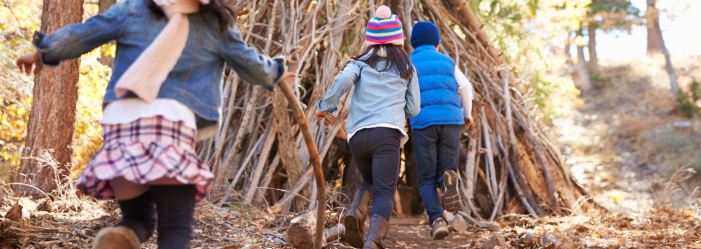
Many parents picture a classroom filled with books, tables, and technology, but what if some of the most meaningful learning happens outdoors?
Outdoor classroom ideas aren’t just a trend. They’re a timeless way to help children connect, focus, and learn through nature. The natural world invites children to slow down, notice details, and discover the joy of learning through experience.
At
Sandwich Montessori School, outdoor learning isn’t something we added as an afterthought, it has always been part of our vision. Long before the world began thinking about outdoor classrooms, we understood what nature offers to children: space to move, breathe, and find calm focus. Whether gardening under the summer sun or tracking animal prints in the winter snow, our students learn that education doesn’t stop at the classroom door, it grows wherever curiosity does.
Outdoor Classroom Ideas That Inspire Learning and Joy
Outdoor classrooms can take many forms, from a shaded patch of grass to a garden corner filled with curiosity. What matters most is the space invites exploration and reflection. Here are a few ideas that bring learning to life.
1. Nature-Based Science Exploration
Science comes alive outdoors. Children can observe the life cycles of plants and insects, measure rainfall, or track temperature changes across seasons. At Sandwich Montessori, students often document the birds they spot in our gardens, noting migration patterns and nesting habits.
One early summer morning, our elementary students gathered under the trees, wide-eyed as a steady hum filled the air. Cape Cod’s cicadas had arrived, and their song could be heard across the playground and garden.
The children collected a few of the empty shells they found clinging to bark, carefully counting how many they discovered on each tree. They compared their tallies, noticing that the larger oaks had more than the younger saplings, and wondered aloud why that might be. Soon, clipboards appeared, and children began charting their findings, adding simple marks for each shell, turning excitement into math in the most natural way.
They sketched the shells in their journals, noting where they were found and what the sound reminded them of. Some described it as “buzzing sunshine,” others said it was “like the trees were singing.” Their curiosity led to simple discoveries like how cicadas live underground for years, how they shed their shells, and how their song changes with the warmth of the day.
Through counting, observation, art, and storytelling, the students practiced patience, wonder, and respect for the living world. What began as a surprising summer sound became a lesson in curiosity, community, and joyful discovery.
2. Reading, Reflection, and Writing Outdoors
Imagine a circle of logs under tall pines . . . children with journals in their laps, listening to the soft rustle of leaves. Outdoor literacy time offers calm and focus that’s hard to replicate indoors.
A simple journaling prompt might ask, “What do you hear right now?” or “Describe the colors of today’s sky.” Children respond with quiet observation and imagination linking reading and writing with mindfulness. One student once wrote, “The wind sounds like thinking.” That kind of reflection can only happen in stillness.
3. Art and Creativity in Nature
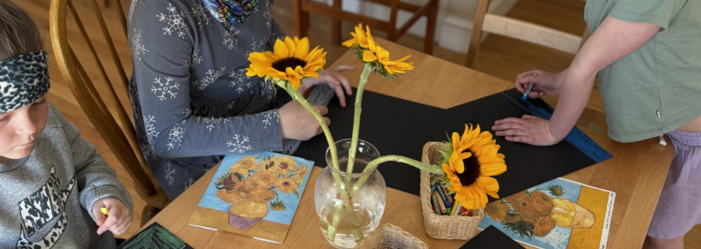
The natural world offers endless inspiration. Children can create art from materials they find including leaves, twigs, stones, or shells, or capture what they see in sketches and watercolor. Some of our students make seasonal mandalas from gathered objects; others paint the patterns of frost or bark.
On a spring morning, you might find a class gathered near the pond with paintbrushes in hand, mixing colors to match the reflections on the water. Working with natural materials fosters creativity, patience, and appreciation for beauty. Montessori believed that imagination grows through contact with reality, and outdoor art allows children to see the extraordinary in the everyday.
4. STEM in the Outdoor Classroom
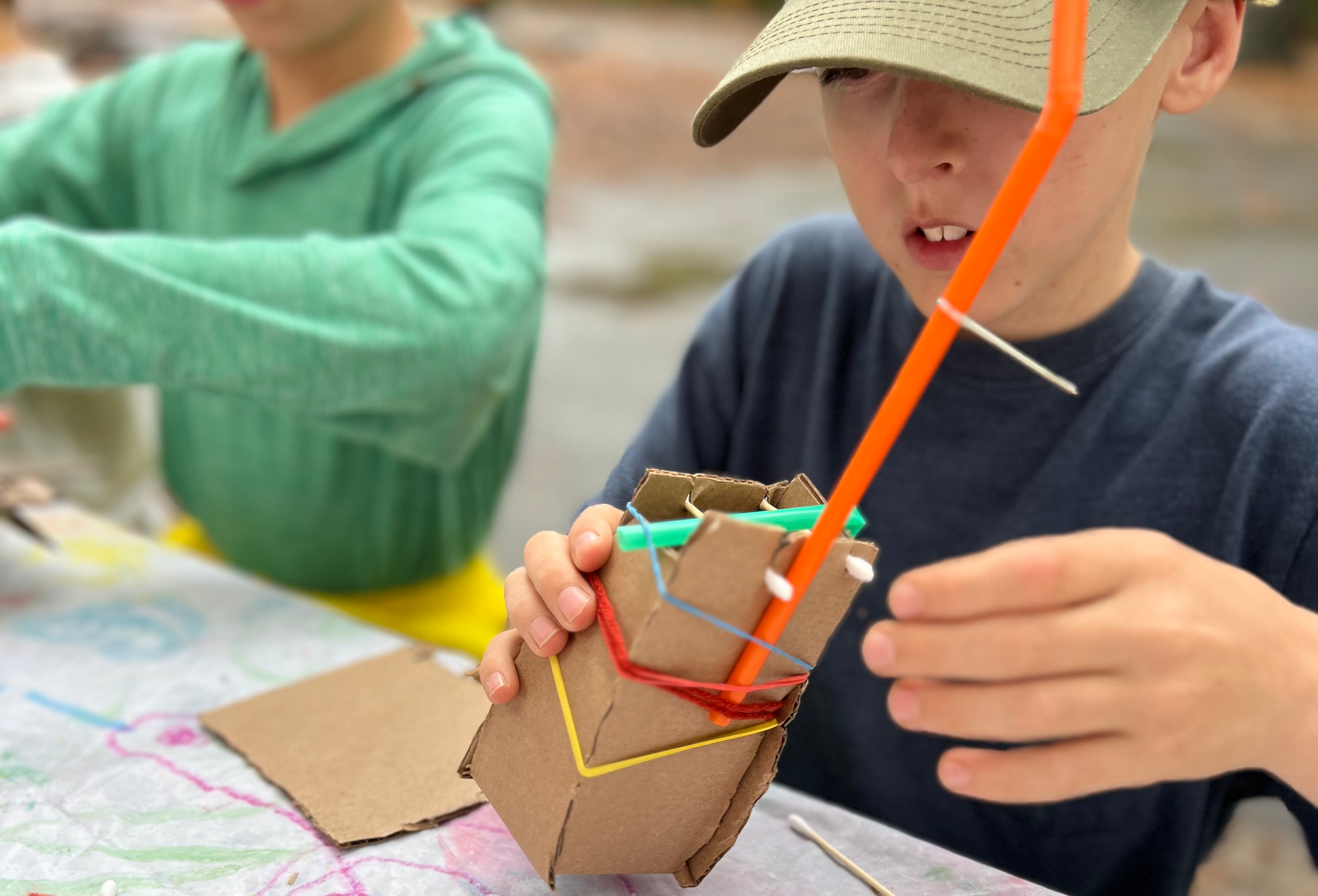
Nature provides everything needed for real-world problem-solving. Students can measure shadows to study geometry, build simple bridges to explore engineering, or test soil pH as part of environmental science.
These lessons are hands-on and memorable. A child who measures the arc of a shadow will never forget how the sun moves through the day. A group that builds a small dam in a stream learns both teamwork and the physics of water flow. STEM outdoors teaches perseverance through experiment and discovery.
5. Outdoor Learning in Every Season
Montessori philosophy values consistency. Children go outside in all kinds of weather because nature teaches resilience.
Winter: Follow animal tracks, build snow shelters, and study how trees protect themselves from cold.
Spring: Plant seeds, watch pollinators return, and chart the growth of new life.
Summer: Collect samples for science studies, sketch outdoors, or read beneath the trees.
Fall: Gather leaves for classification and art, observe migration patterns, and celebrate harvest time.
When children experience the seasons directly, they learn that learning is not seasonal, it is continuous and alive.
Designing an Outdoor Classroom That Works
An outdoor classroom doesn’t have to be elaborate. The best spaces use what already exists: logs for seating, rocks for gathering circles, trees for shade. A few portable bins can hold magnifying glasses, journals, and art supplies. A garden corner or raised bed can become a living science lab.
At Sandwich Montessori, children study under tall trees, tend small vegetable gardens, and gather for lessons in a circle of logs. Each area supports a different kind of work science, art, reflection, or group dialogue. This balance of structure and freedom gives students space to explore within clear expectations.
Thoughtful design ensures that learning can continue through the seasons. Weatherproof bins, clipboards, and mats make it easy to transition between indoor and outdoor work. The environment becomes an extension of the classroom, not an occasional field trip.
The Academic and Emotional Benefits of Outdoor Learning
Outdoor learning supports both the mind and the heart. Movement increases oxygen to the brain, improving focus and memory. Studies from the University of Illinois Landscape and Human Health Laboratory show that time spent outdoors reduces symptoms of anxiety and improves emotional regulation in children.
Academically, outdoor classrooms enhance engagement and retention. When students learn by touching, observing, and experimenting, they remember concepts more deeply. Emotionally, caring for plants or watching life cycles unfold nurtures empathy and patience.
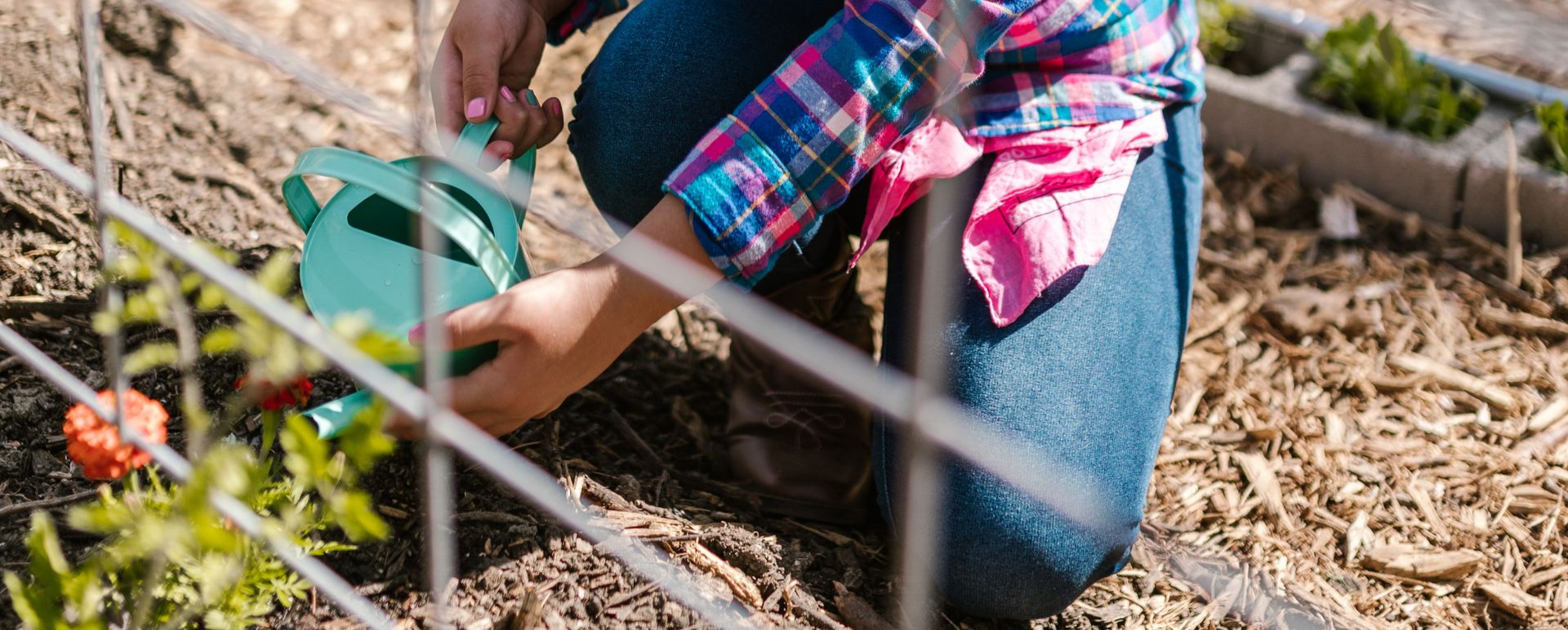
Montessori wrote, “When children come into contact with nature, they reveal their strength.” That strength shows up in confidence, perseverance, and joy. After planting and caring for their own garden beds, our students light up at harvest time . . . not because someone told them to, but because they have witnessed the results of their own steady effort.
One of our elementary teacher leaders, shared, “Outdoor learning isn’t separate from academics, it’s where we see children apply what they know with confidence. Curiosity takes the lead.”
Why Outdoor Learning Matters
Long before the pandemic, we had a clear and intentional vision for outdoor learning. Montessori philosophy has always celebrated nature as a teacher, and at Sandwich Montessori, that belief has shaped our days for years. Fresh air, movement, and connection with the natural world have always been essential to how we help children focus, grow, and find peace.
We knew that children needed to spend time outdoors to develop concentration, balance, and curiosity, and that’s how we designed programming at our school. Not everyone shared that perspective at the time. Many schools saw outdoor spaces as “recess areas,” not as living classrooms. When COVID-19 arrived, however, the world paused, and families and educators began looking for ways to reconnect safely, and the outdoors became a lifeline. What had always been at the heart of our practice became a shared realization for others: time outside supports emotional health, deepens learning, and restores balance.
At Sandwich Montessori, the moment affirmed what we already believed. We didn’t shift our philosophy; we expanded it. The pause gave us space to design more outdoor environments, add raised garden beds, and weave nature-based work into every level of the school. The vision became stronger.
Dr. Montessori knew this connection long before modern research confirmed it. “There must be provision for the child to have contact with nature,” she wrote, “to understand and appreciate the order, the harmony, and the beauty in it.”
Author Richard Louv echoed this insight in
Last Child in the Woods, coining the term “nature-deficit disorder.” His research showed what educators see every day: time outdoors reduces anxiety, improves attention, and sparks creativity. He wrote that children who spend time outside “develop a sense of wonder so deep that it lasts a lifetime.” That idea lives in every corner of our campus.
Across the world, countries like Norway have modeled this beautifully. Their
friluftsliv philosophy, literally, “open-air life”, reflects the belief that time in nature is essential to wellbeing. Children there spend hours outside in all weather, learning resilience, teamwork, and confidence. We have always looked to those examples, finding encouragement in the way they align with what Montessori education has championed for more than a century.
Research continues to affirm what Montessori, Louv, and Nordic educators have demonstrated for generations. The
American Institutes for Research found that students in outdoor classrooms show stronger problem-solving skills and higher academic performance. The
University of Illinois Landscape and Human Health Laboratory reports that time in nature lowers stress hormones and improves executive functioning, the brain’s ability to plan, focus, and self-regulate. These findings mirror what we see daily: children who spend time outdoors are calmer, happier, and more engaged in their work.
One chilly March morning, our elementary students huddled around the raised garden beds, turning the soil and finding early earthworms. “They’re already awake!” one student shouted. That discovery led to a conversation about soil temperature, hibernation, and the quiet patterns of life that continue even when the world looks still. Nature teaches lessons no worksheet could capture.
Bringing Nature Home
Parents can bring the same peace and curiosity home in simple ways. Start a small herb garden or a few potted plants that children can tend. Keep a shared nature journal where everyone records daily observations or sketches. Take family walks and notice the details of the world . . . shapes of leaves, colors of sky, patterns of clouds.
Create a “nature nook” at home . . . a calm corner with rocks, pinecones, or shells collected on family adventures. These small reminders invite reflection and connection. The goal isn’t to add more activities, but to notice more deeply what already surrounds us.
Learning with the Earth, Not Just About It
Outdoor learning is more than a teaching strategy. It’s a way of reconnecting with what education is meant to do, help children see their place in the world and care for it.
At Sandwich Montessori School, outdoor classrooms are part of who we are. Every lesson, from math to art, includes time to move, breathe, and observe. Children learn with the earth, not just about it. The result is a balance of curiosity, calm, and gratitude that carries far beyond the school day.
Visit us at Sandwich Montessori School →
Here
Bibliography
- Louv, R. (2008). Last Child in the Woods: Saving Our Children from Nature-Deficit Disorder. Algonquin Books.
- American Institutes for Research (2005). Effects of Outdoor Education Programs for Children in California.
- University of Illinois Landscape and Human Health Laboratory (2019). Nature and Attention Study.
- Montessori, M. (1949). The Absorbent Mind.