The Gift of Boredom: Why Unstructured Play Helps Children Grow and Thrive
The Gift of Boredom: Why Unstructured Play Helps Children Grow and Thrive

Parents often feel pressure to fill every minute of their child’s day with camps, lessons, schedules, and sometimes “educational” apps. What if boredom is not a problem to solve, but a gift to protect? What if the moments when children look at you and say, “There’s nothing to do,” are actually the beginning of deep learning? Picture your child standing in the kitchen, arms crossed, looking dramatically defeated. Two minutes later, that same child is wrapping the dog’s leash around a dining chair and calling it a “sled.” That transformation, from boredom to invention, is the magic we want to protect.
Unstructured play, time without rules,
screens, or adult-led agendas, is where creativity and problem-solving come alive. It is the kind of play where children lose themselves in imagination, follow their curiosity, and discover what they are capable of. Montessori education has always understood this truth. Our long, uninterrupted work cycles mirror the same principle: children thrive when they have space, time, and trust.
This guide explains what unstructured play is, why it matters for healthy child development, and how families can nurture it during winter break and beyond.
What Is Unstructured Play?
Unstructured play is child-led, open-ended, and rooted in imagination. It’s not about fancy toys or curated activities. It’s the kind of play children invent on their own when no one is directing them.
Structured play happens when adults create the plan or give the instructions: sports teams, puzzles with a specific solution, apps that guide the next step.
Unstructured play happens when children decide what to do, how to do it, and how long to do it for: building forts, creating elaborate pretend worlds, exploring outside, or turning a cardboard box into a rocket ship. The child leads, and the adult steps back. In unstructured play, there’s no predetermined ending. Children follow the thread of their curiosity, sometimes for five minutes, sometimes for an hour, and the learning unfolds naturally as they go.
In Montessori classrooms, this principle appears as
freedom within limits. Children make real choices and learn by exploring the environment with purpose and independence within a framework outlined by the adult and enough open-ended decision-making that allows the child to step in and make critical-thinking decisions about their time and effort.
Maria Montessori said it simply: “Play is the work of the child.”
Unstructured Play is Crucial for Children’s Development
These three areas, creativity, focus, and emotional resilience, are the foundation of long-term academic and social success, yet they grow best in moments when adults step back.
1. It Builds Creativity and Imagination
When children direct their own play, they think in flexible, inventive ways. They test ideas, experiment, and reimagine materials over and over again. This is divergent thinking, one of the strongest predictors of creative problem-solving in adulthood.
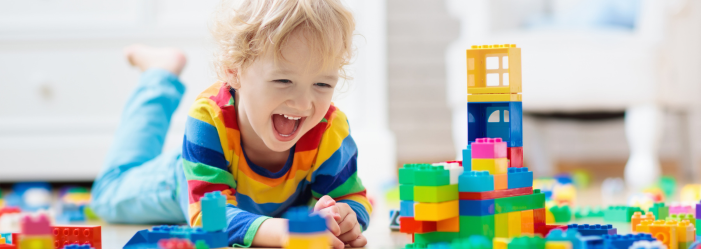
A block tower becomes a castle, a scarf becomes a river, a pile of pinecones becomes ingredients in a pretend soup and creativity blooms when no one tells the child what something is supposed to be.
Montessori environments echo this through self-chosen work that naturally sparks imagination and deep engagement.
2. It Strengthens Focus and Independence
Children concentrate more deeply when they follow their own interests. Unstructured play allows them to stay with something as long as their curiosity lasts, without the interruption of timers, transitions, or adult agendas.
This is also how the brain learns to sustain attention. Fewer screens and fewer rapid transitions mean more time for the neural pathways of concentration to develop.
Montessori’s uninterrupted work cycle supports the same skill. When children choose their work, they practice independence and internal motivation, both of which grow stronger through unstructured time at home.
3. It Builds Emotional Resilience and Confidence
Boredom is not a failure, it’s a starting point. When children have to figure out what to do next, they learn to tolerate discomfort, think creatively, and solve small frustrations independently.
A child who wanders the room, unsure of what to play, will eventually settle into something meaningful. The moment they do, they experience pride, competence, and joy. These moments build emotional resilience. Unstructured time sends an important message: “I trust you. You can figure this out.”
The Hidden Costs of Too Much Structure
Many modern families feel the pressure to keep children busy. Enrichment classes after a full day of school, sports, playdates, and practice sessions fill schedules quickly. Screens fill the quiet spaces in between. Child development research shows that too much structure can quietly work against what children actually need to grow. This isn’t a criticism of enrichment or activities, children enjoy them and benefit from them. The challenge comes when childhood tilts too far toward performance and not enough toward curiosity and rest.
Studies highlight several hidden costs of over-scheduled childhoods:
Limited creativity and independent thinking.
Researchers at the University of Colorado found that children who spend more time in structured activities show lower levels of self-directed executive functioning, the very skills needed for planning, problem-solving, and independent thinking. In contrast, children who spend more time in free, unstructured play demonstrate stronger ability to initiate ideas, manage time, and persist through challenges.
Increased anxiety and emotional fatigue.
A study published in Frontiers in Psychology showed that constant performance-based activities (like lessons, competitions, and tightly scheduled routines) correlate with higher stress levels and reduced emotional regulation in school-aged children. Downtime acts as a protective buffer for the nervous system.
Reduced
intrinsic motivation.
When adults constantly direct activities, children learn to look outward for ideas, approval, and entertainment. Developmental psychologists note that this can undermine intrinsic motivation, the natural desire to explore just for the joy of it.
Dependence on external direction.
Children who are always guided can become hesitant when asked to choose independently. Research from the University of Rochester (Deci & Ryan’s Self-Determination Theory) shows that autonomy is a key building block of confidence, curiosity, and long-term motivation.
Montessori environments offer a different model. The prepared environment is structured only so that children can explore freely. Structure exists to empower, not control. The goal is not to keep children busy, but to give them the space and freedom they need to think, create, and become increasingly capable on their own.
Encouraging Deep Play at Home
Here are simple ways to nurture unstructured play at home, especially during winter break.
1. Create Open-Ended Play Invitations
Set out simple materials without instructions: blocks, scarves, cardboard boxes, pinecones, wooden figures, art supplies . . . Children will invent the purpose.
A basket of pinecones, for example, can become ingredients, building blocks, money at a pretend store, or characters in a story. The material does not dictate the play, the child’s imagination does.
2. Protect “Do-Nothing” Time
Children benefit from boredom. That in-between moment, when they are unsure what to do, is exactly where deep play begins.
If a child says, “I’m bored,” offer presence and space, not a list of activities. Try responding with: “That sounds like a good moment to explore. I’m here if you need me.” Children interpret this calm confidence as, “I can handle this,” which strengthens their problem-solving instincts more than any suggested activity ever could.
3. Encourage Outdoor Exploration
Even in winter, nature offers endless invitations for deep play. Decades of developmental research show that children remember rhythms, not events, they remember how a season felt more than what they did. At Sandwich Montessori School, we go outside in all weather - rain, shine, wind, or snow - because with the right gear, every season becomes a learning season. This is a core part of our culture at Sandwich Montessori School, weather builds resilience, imagination, and joy. Children invent play because of winter, not in spite of it.
Cold mornings invite leaf-racing games in the wind. Light snow reveals animal tracks to follow and compare. Frozen puddles become tiny science labs as children test which ones crack, melt, or stay solid. When the ground hardens, small hills turn into sliding ramps. Sticks, pinecones, and seed pods become building materials, ingredients, or characters in imaginative stories.
Montessori education values movement and sensory exploration, and the
outdoors supports both naturally. All seasons, and all kinds of weather offer new textures, new challenges, and new curiosities, helping children regulate, focus, and think creatively simply by being outside.
4. Model Curiosity and Calm
Children don’t just watch us, they absorb us. Neuroscience calls this co-regulation: children borrow the nervous system of the adult closest to them. Our calm becomes theirs. Our pace becomes their pace, our energy becomes their energy. When parents move through the day with a sense of curiosity and calm, children instinctively follow.
A daily “quiet hour” can transform the rhythm of a home. Everyone chooses independent work like reading, sketching, knitting, journaling, writing holiday cards, or simply watching snow fall outside the window. Children learn that focus and creativity are not things to perform, but ways to be.
And even though it can feel indulgent to sit still when there is so much to do, it’s worth remembering: When adults protect space for their own calm, children receive one of the most powerful gifts of all, an emotional blueprint for how to settle themselves.
Your stillness becomes their model for concentration; your quiet joy becomes their permission to slow down, and your presence becomes their guide.
A few minutes of intentional calm from you can shift the entire tone of the home, inviting deeper play, longer focus, and a feeling of steadiness that children return to again and again.
Resetting Play Spaces for Creativity
A reset play space can transform a child’s ability to engage independently. Less is more. Too many toys overwhelm the senses and shorten attention spans.
Rotate materials weekly, and organize by function: a shelf for art, a shelf for building, a shelf for pretend play. A few baskets on a low shelf with crayons, blocks, and play silks invite far more creativity than an overflowing toy bin ever could.
Make everything accessible at child height so they can choose independently.
In Montessori, the environment teaches. A prepared home space invites children to act with purpose.
How Montessori Encourages Unstructured Play
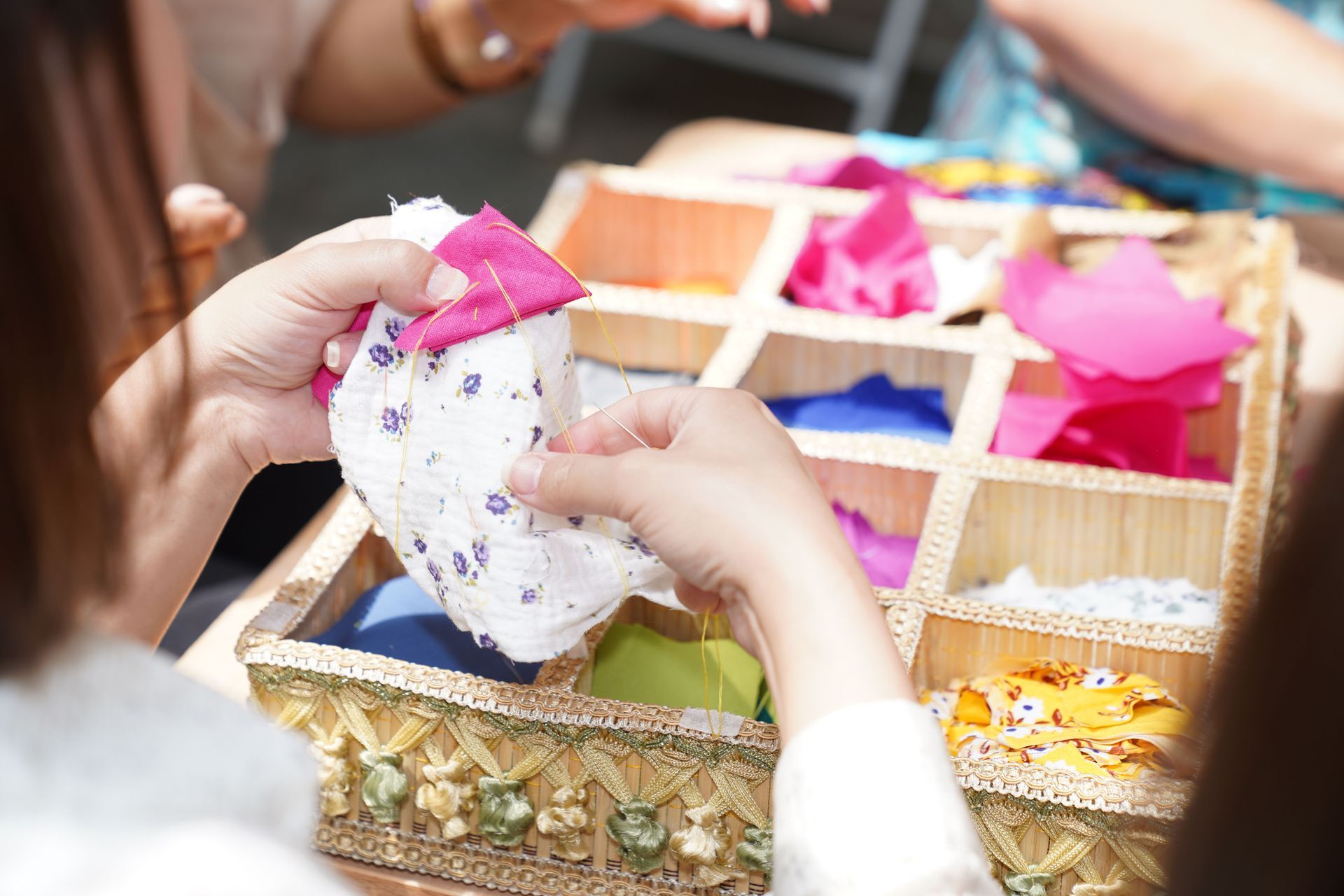
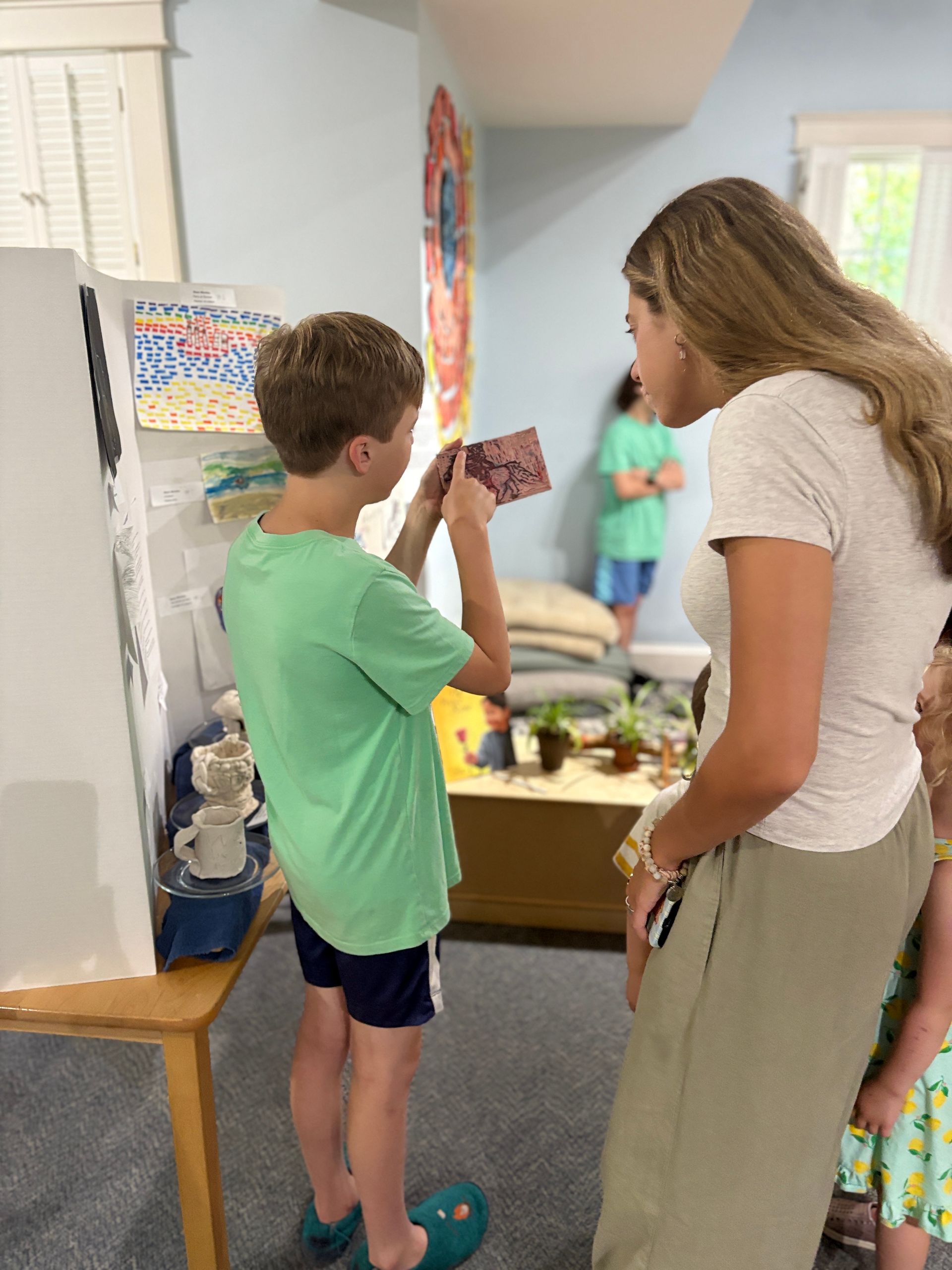
Montessori classrooms naturally balance structure and freedom. Children move through their work cycle choosing materials, collaborating with peers, and problem-solving at their own pace. In one morning, you might see one child weaving a bracelet, another sketching a leaf they found outside, two more building an obstacle path together, and someone quietly observing it all before joining in. Each choice is purposeful, and each child is following their own developmental path.
Outdoor environments offer opportunities for self-directed exploration. On the Sandwich Montessori School campus, children might collect leaves, design small obstacle paths, explore snow formations, or build simple stick shelters on warmer winter days. The purpose is not the product, it is the curiosity, concentration, and confidence built in the process.
Helping Parents Redefine “Productive” Time
Children learn during unstructured play, even when it looks simple or quiet. A child stacking sticks in the yard is practicing math and engineering. A child telling stories with figurines is building early literacy and executive functioning. A child curled up drawing is learning to focus, persist, and create.
Maria Montessori wrote, “Imagination does not become great until human beings, given the courage and the strength, use it to create.” Unstructured play gives children both. Trust the process, slow days are productive days.
Unstructured Play and the Winter Break Reset
Winter break gives families a rare chance to breathe, slow down, and reconnect. Simple rhythms create space for deep play.
- Morning: outdoor walk, creative project, or free play
- Afternoon: quiet time, reading, or independent exploration
- Evening: family cooking, storytelling, or board games
Children do not need more activities. They need balance, calm, and room to imagine.
Building Lifelong Learners Through Unstructured Play
Unstructured play helps children grow into capable, curious adults who think deeply and independently. It nurtures imagination, focus, emotional strength, and authentic confidence.
Montessori philosophy teaches that children develop their fullest potential when given time, trust, and freedom to explore. Offering unstructured play is an act of love. It tells your child, “You are capable. You can discover. You can create.” And in those quiet, unstructured moments, children begin writing the story of who they are becoming - curious, confident, and deeply connected to their own abilities.
Learn more about how our Montessori classrooms nurture independence and curiosity through play
HERE.