A New Montessori Middle School on Cape Cod: Inside Our Growing Program
A New Montessori Middle School on Cape Cod: Inside Our Growing Program
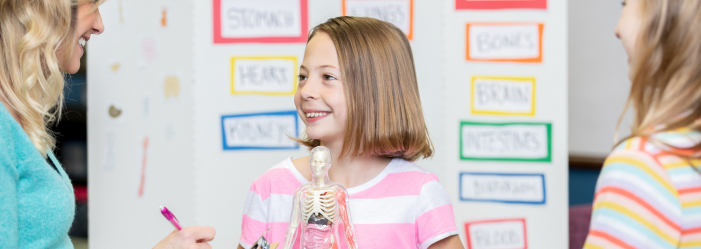
The middle school years bring a shift that many families can feel almost overnight. Students want more independence. Friendships and peer relationships take on greater importance. Academic work becomes more complex. And children who once happily followed an adult's lead begin forming stronger opinions about what interests them, what they believe, and who they want to become.
For families who have chosen a more individualized approach to education, that transition can raise a difficult question: How do we give a middle schooler more independence without giving up the flexibility, connection, and values that mattered to us in the first place?
That question is at the heart of the growing Middle School program at Sandwich Montessori School.
Our goal isn't to recreate a conventional middle school in a smaller setting. We're building a Montessori Middle School on Cape Cod that allows 7th and 8th grade students to be challenged academically, develop greater independence, build meaningful relationships, and see how what they're learning connects to the world beyond the classroom.
And because no two middle schoolers—or families—need exactly the same thing, we're building it with flexibility at its core.
Middle School at a Glance
Grades: 7th–8th grade
Location: Sandwich Montessori School on Cape Cod, Massachusetts
Ways to Participate: Join us on campus or participate in digital experiences remotely from anywhere in the world.
Flexible Enrollment: Choose one or more core academic courses, add enrichment experiences, or build a part-time or full five-day Middle School schedule.
Course Format: Core academic courses are offered by trimester.
Each Week, Students:
- Complete two lessons independently
- Join their teacher for a weekly live class, on campus or remotely
- Connect through an online community for resources and support
Community: Students and families participate in a monthly community seminar.
Core Academic Courses: Middle School Math, Blogging & Publishing Lab, Literature Lab, Astronomy & Space Science, and Finance & Investing.
Fall Trimester: Begins in September.
Why We're Growing a Montessori Middle School on Cape Cod
Sandwich Montessori School has always grown from the needs of real families.
As our students get older—and as more families explore homeschooling and alternative approaches to education—we've seen a particular need emerge during the middle school years.
There are many resources available to families educating younger children. Middle school can feel different.
The material becomes more complex. Students naturally begin wanting greater independence from their parents. Their relationships with peers become increasingly important. And families who have carefully created an individualized education for their children may wonder how to preserve that while also giving them the challenge, community, and independence they now need.
We wanted to create a place where those things didn't have to compete with one another.
What Middle Schoolers Need at This Stage
Middle schoolers need to be challenged, but they also need a place where they feel safe enough to be themselves.
They need opportunities to become more independent while still having adults available to guide and support them. They need to begin looking beyond themselves and considering bigger questions about their communities and the world.
And they need peers.
As peer relationships become increasingly important developmentally, Sandwich Montessori gives students a community in which they can build those relationships while their families remain connected to the educational experience.
The goal isn't independence from adults. It's increasingly capable independence supported by adults who know the student, provide meaningful boundaries, and know when to step in and when to step back.
Learning That Leads to Something Real
We also believe middle school students are ready to ask a question that doesn't always have a satisfying answer in traditional schoolwork:
Why am I learning this?
Our answer should be better than, "because it's on the test."
Across our Middle School program, we're intentionally looking for ways students can do something with what they're learning.
A student might investigate a mathematical claim, publish writing for a real audience, analyze an actual company, debate an interpretation of a novel, make observations of the night sky, teach their family something they've discovered, or use new knowledge to investigate a question that matters to them.
Learning becomes visible. Students begin to see connections between an academic subject, their own lives, and the world around them.
What Makes Our Middle School Program Different?
Education That Comes With Choice
Choice is one of the defining features of our growing Middle School program at Sandwich Montessori School.
Families can choose the amount and type of support that makes sense for them. Students may participate on campus or remotely. They can take individual courses, combine academics with enrichment experiences, or build a larger part-time or full-week schedule.
Choice exists within the learning itself, too.
Rather than assuming every student of a particular age should complete exactly the same work at exactly the same level, students can be given different ways to explore a concept, apply what they're learning, or challenge themselves.
Choice doesn't mean a lack of academic expectations. It means creating multiple meaningful paths toward growth and allowing students to take increasing ownership of the path they follow.
Mixed-Age Learning and Community
Montessori education has long recognized the value of mixed-age learning, and we believe it remains especially valuable during the middle school years.
Students aren't all developing at exactly the same rate simply because they share a birth year. One student may be ready to stretch significantly in one area while needing more time or support in another.
Mixed-age environments allow students to learn from one another, help one another, lead from their strengths, and continue developing in areas that are harder for them.
It also reflects life outside of school. We don't spend adulthood interacting only with people who are precisely our own age. Learning how to collaborate with people at different stages, contribute what you know, ask for help, and learn from someone else's strengths are valuable skills in their own right.
Real Work, Real Audiences, Real Outcomes
One of the ideas we're most excited about is bringing authentic work into middle school academics.
Our Blogging & Publishing students, for example, aren't simply completing pretend writing assignments. They can study real publications, learn how writers identify an audience, pitch ideas, research, interview, draft, receive editorial feedback, revise, fact-check, and prepare a piece for publication.
When their work is ready, it can have the opportunity to reach an actual audience, by being published on one of our network of blogs that is read by thousands of families and educators every month.
That same philosophy carries across subjects: whenever possible, we want students investigating real questions, working with authentic sources and information, and using what they've learned for a meaningful purpose.
A Flexible Middle School Experience for Different Families
One of the biggest lessons we've learned from families is that flexibility doesn't mean the same thing to everyone.
For one family, flexibility might mean homeschooling most subjects but getting expert support for math.
For another, it might mean having their child spend several days on campus.
Another student may participate digitally because their family travels, lives outside Cape Cod—or even outside the United States—or simply needs a school schedule that works differently.
Our digital experiences are open to students anywhere in the world, allowing families to access the Sandwich Montessori approach without needing to live near our Cape Cod campus.
That's why we're not building one prescribed path through middle school.
Build a Schedule That Works for Your Student
Families can begin with one or more core academic courses, add afternoon enrichment experiences, or create a part-time or full five-day Middle School schedule.
Core courses are offered by trimester. During a typical week, students complete two lessons independently and participate in a live class with their teacher, either on campus or remotely. Families also have access to an online community for resources and support, along with a monthly community seminar.
Students can join for a trimester or continue throughout the year.
That makes it possible for families to begin with the support they need now and adjust their child's experience as interests, academic needs, family schedules, and independence change.
You Don't Have to Become the Middle School Teacher
For homeschooling families in particular, middle school can bring a new kind of anxiety.
Maybe elementary math felt manageable, but algebra doesn't. Maybe you're comfortable helping your child write but don't feel prepared to teach astronomy, investing, or the nuances of a complex historical topic.
We don't believe choosing an individualized education means a parent should suddenly have to become an expert in every middle school subject.
Our courses are being designed so students can work with increasing independence, connect with teachers and experts, and have a community to turn to with questions.
Parents can remain deeply involved in their child's education without having to personally teach every concept.
For some families, that can make the difference between feeling that homeschooling has become unsustainable in middle school and realizing they can continue the educational approach they value with a larger support system around them.
Inside Our Middle School Core Academic Courses
Our core courses address Common Core and Massachusetts learning standards while going beyond simply covering standards. Students are asked to apply ideas, make connections, investigate questions, and increasingly take ownership of their work.
Middle School Math
How many grains of sand would it take to fill the universe?
More than 2,000 years ago, Archimedes actually tried to answer that question.
In Middle School Math, problems like that become the way students learn mathematics—not an application added after the "real" lesson.
Students may estimate enormous and microscopic quantities, build a scale model of the solar system, test extraordinary claims using mathematics, analyze patterns in real data, or use geometry and measurement to solve design problems.
Along the way, they develop skills in number systems, equations, proportional reasoning, functions, geometry, statistics, and more.
Blogging & Publishing Lab
What changes when a middle schooler knows someone may actually read what they write?
In Blogging & Publishing Lab, students experience the work of real writers, editors, bloggers, and publishers.
They learn to consider audience and purpose, pitch ideas, research using credible and primary sources, interview and investigate, draft, receive editorial feedback, revise, fact-check, and prepare work for publication.
Narrative, informational, argumentative, and research writing aren't isolated school assignments. They're forms of communication students learn to use for a real purpose. When they finish writing their piece, it gets published to one of our content sites that thousands of families and educators read every single month!
Literature Lab
Literature Lab begins with books but doesn't end there.
Students read classics, modern works, and selected texts while exploring questions middle schoolers are already beginning to encounter:
Who am I? What do I believe? What's fair? Who gets to tell the story? When should I question what everyone else thinks?
Students investigate the worlds surrounding their books through primary sources, history, art, speeches, letters, and contemporary connections. Live classes become literature seminars where students discuss ideas, defend interpretations, encounter different perspectives, and sometimes change their minds.
The objective isn't simply to find the "right answer" about a book, we’re teaching them to learn to think deeply and support their own thinking with evidence.
Astronomy & Space Science
The universe isn't confined to a textbook. It's right outside.
Students make observations, track what's happening in the night sky, investigate planets and celestial objects, work with scientific information and data, and follow discoveries and missions that continue to change what we know.
They also examine original observations, historical records, images, data, and primary sources while returning to one of science's most important questions:
How do we know that?
Science, mathematics, history, physics, and technology naturally intersect as students investigate a universe that scientists are still actively exploring.
Finance & Investing
Rather than learning financial concepts only in theory, students investigate real companies, markets, financial information, and investment decisions.
They might research a company, compare competitors, investigate a market crash, analyze risk and return, explore the effects of news on markets, or develop and defend an investment thesis.
Along the way, mathematics such as percentages, probability, statistics, compound growth, interest, inflation, risk, borrowing, and the time value of money becomes useful because students need it to make informed decisions.
Students may build and track portfolios and, with family involvement when appropriate, even use what they've learned to make a small real-world investment.
They won’t just learn which stocks to buy - they'll learn how to investigate an opportunity, understand the numbers, question what they're being told, evaluate risk, and make a reasoned decision.
Enrichment Is Part of the Middle School Experience, Too
We don’t believe that middle school should be reduced to a checklist of academic requirements. It’s an important time for students to experiment: to try something unfamiliar, develop a skill, discover an interest, or realize that something they expected to love isn't actually for them.
Our enrichment offerings give students additional opportunities to explore interests, develop new skills, and spend time learning alongside other students.
Families can choose from enrichment classes spanning from Spanish, the history of art through clay, Dungeons and Dragons, Piano and Voice, and more. They can add these experiences alongside core academic courses, giving students another way to build a Middle School experience around the interests and needs of the individual child.
[Explore Sandwich Montessori Enrichment Programs →]
Preparing Middle Schoolers for More Than High School
Of course we want students academically prepared for what comes next.
But preparation for high school isn't the only goal of middle school.
We want students learning how to investigate something they don't understand. Ask better questions. Evaluate information. Explain their reasoning. Listen to another perspective. Revise their thinking when new evidence warrants it. Manage increasingly independent work. Communicate their ideas. Contribute to a community.
Those skills are all part of becoming a capable learner.
When students have opportunities to choose among meaningful experiences, they also begin learning something about themselves.
- What am I curious about?
- What am I good at?
- What challenges me?
- What kind of work feels meaningful?
- What do I want to know more about?
Middle school doesn't have to provide final answers to those questions. It should give students enough room to begin asking them.
A Middle School Community for Students and Families
One of the most important parts of our program may be something that doesn't fit neatly into a course description: community.
Middle school students increasingly want relationships and experiences beyond their immediate family. Families navigating alternative education want community, too.
At Sandwich Montessori, students have opportunities to learn alongside peers while parents remain part of the larger community. Families can connect with others asking many of the same questions they are—from how to navigate the middle school years to what comes next for high school.
It gives students room for their world to expand without requiring families to disconnect from it.
Who Might Thrive in Our Middle School Program?
There isn't one "type" of Sandwich Montessori Middle School student.
But our program may be especially appealing to families who value individualized education and want to preserve flexibility and choice as their child gets older.
It may be a good fit for students who are curious, interested in learning, and ready to see stronger connections between what they study and the world around them.
It may also appeal to families who aren't looking for an all-or-nothing educational choice—families who want access to strong academics, knowledgeable teachers, meaningful peer relationships, and authentic learning experiences while retaining the ability to shape an education around their own child.
Come Grow With Us at Sandwich Montessori School
Our Middle School program is growing, and that's part of what makes this moment exciting.
We're building a program around the students and families who are joining us—not simply replicating a traditional middle school model and asking families to fit inside it.
Whether your 7th or 8th grader joins us on our Cape Cod campus or participates digitally from somewhere else in the world, the goal is the same: to create a personalized, connected Middle School experience that challenges students, gives them meaningful opportunities to grow, and helps them see what they can do with what they learn.
If you're exploring a Montessori Middle School on Cape Cod, looking for support as your child moves into the middle school years, or interested in flexible digital learning opportunities, you can learn more about the program and explore current enrollment options below.
[Explore Sandwich Montessori Middle School →]
What grades does the Montessori Middle School on Cape Cod serve?
Sandwich Montessori School's Middle School program serves students in 7th and 8th grade, with flexible enrollment options including individual courses, part-time schedules, or a full five-day week — available both on campus and remotely.
Can students attend the Montessori Middle School on Cape Cod if they don't live on Cape Cod?
Yes. Sandwich Montessori School offers fully digital learning experiences open to students anywhere in the world, making it possible for families who live outside Cape Cod — or even outside Massachusetts — to access the program remotely.
What core academic courses are offered at Sandwich Montessori's Middle School?
Current core academic courses include Middle School Math, Blogging & Publishing Lab, Literature Lab, Astronomy & Space Science, and Finance & Investing. Courses are offered by trimester, and students may enroll in one course or combine several into a larger schedule.
How is a Montessori Middle School different from a traditional middle school?
Unlike conventional middle schools, a Montessori Middle School prioritizes student choice, mixed-age learning, and authentic real-world application of knowledge. At Sandwich Montessori, students work with increasing independence, connect with expert teachers, and have opportunities to do meaningful work — like publishing writing for a real audience — rather than learning strictly for tests.
Is Sandwich Montessori's Middle School a good option for homeschooling families on Cape Cod?
It's designed with homeschooling families in mind. Parents can enroll their child in just the courses they need support with — like math or writing — without committing to a full school schedule, so families can continue a flexible, individualized approach without parents having to personally teach every middle school subject.