A Different Kind of Summer Camp on Cape Cod
Summer Camp at Sandwich Montessori School

Imagine the end of a summer week where your child isn’t restless and ready for a screen, but instead, holding something they’ve made. A jar of homemade tomato sauce they made from scratch. Or, a ceramic piece wrapped in tissue. A screen-capture of a Minecraft world they designed and built! A tangible representation of a week of summer fun.
That's the thinking behind the development of the
Sandwich Montessori School Summer Elementary Program on Cape Cod. It’s a series of expert-led themed weeks for children ages 7 to 14 that look and feel a little different from the typical summer camp. Each week is led by a practicing expert: a teaching artist, a theater director, a Minecraft educator, or a STEM teacher, and every week ends with something worth being proud of.
For Cape Cod families searching for a summer camp experience that goes beyond the usual camp activities - this is a unique option. In this article, we’ll explore all the various themed weeks available this summer, what happens inside the room, what your child takes home, and how to pick the right summer camp for your child.
Why Summer Camp Matters for Elementary-Aged Children
It’s easy to understand the pattern of how children learn across the school year. Months of accumulated progress in reading, math, and writing can sometimes quietly erode over a long unstructured summer.
Researchers sometimes call this the summer slide. The good news though is that children with access to enriching summer experiences tend to return to school with their skills intact.
But summer learning loss is only part of the picture. The years between seven and fourteen are a particular kind of developmental window where children are forming their identity as learners. They begin to think of themselves as someone who builds things, performs, invents, grows food, or makes art. They fit into their learning. The experiences they have during these years and the adults they work alongside help to shape their learning identity.
Benefits of a Quality Summer Program
What research on enrichment programs consistently shows is that the quality of the experience matters more than the subject matter. Children who spend a week working on something real, guided by someone who genuinely knows their craft, develop more than domain specific skills. They develop the habit of sustained concentration, they learn what it feels like to work through a problem rather than abandon it and they build the kind of confidence that comes not from finishing something and holding the proof in their hands.
Why Consider a Mixed-Age Environment for Summer Camp
Mixed-age environments are particularly effective for this age range. Research on mixed-age learning has consistently found that older children develop leadership and communication skills when they mentor younger ones, while younger children stretch further (creatively and academically) when they're working alongside peers who are a few years ahead.
This is exactly what Maria Montessori observed about the elementary years more than a century ago, and it's what the Sandwich Montessori Summer Elementary Program is built around: children ages 7 to 14, in the same environment, working together.
How to Pick the Right Summer Camp for Your Child
Summer camp decisions may seem simple on the surface level - your child loves art, so you find an art week or your child is into building, so you look for an engineering program. Interest is a totally reasonable starting point. But for families who are interested in a summer program that emphasizes learning, the question worth asking before you enroll is what kind of learning experience the week actually delivers.
A few things to look at when you're evaluating any learning based summer program on Cape Cod (or anywhere else):
Who is leading the program, and what experience do they have? There's a meaningful difference between a generalist counselor who runs art activities and a working artist who teaches from genuine expertise. The same is true in every domain. There’s nothing wrong with one or the other, the difference is in what the experience will provide and how that aligns with your goals.
What does your child walk away with? A finished artifact - something tangible that required real effort, is one of the clearest signals that learning happened. It's also something your child can show, keep, and be proud of long after the week ends.
How big is the group? Group size directly affects how much individual attention a child receives and how well the environment can be managed. A boutique week of twelve children is a different experience than a large group camp program, and the difference shows in the quality of the instruction and the depth of the work.
Does the program emphasize learning? This is harder to assess from a website, but look for language that describes what children will make, think through, and produce. Programs designed around entertainment tend to produce entertainment. Programs designed around real learning tend to produce real learning.
Does it match your child's temperament, not just their interests? Some children thrive in an immersive, structured week where every hour has a purpose. Others need more room to wander. Knowing which kind of learner your child is matters in helping them find the right fit.
No single program is right for every child, and different weeks in the same lineup will suit different children differently. The goal is to find the balance between a week where your child is challenged at the right level, led by someone who knows their subject, and working on something that feels interesting for them!
The 2026 Summer Lineup at Sandwich Montessori School
Minecraft Masters: Redstone, Builds & Creative Challenges
June 15–18 and August 10–14 · Ages 7–14
If your child talks about redstone circuits at the dinner table, has opinions about build design, or would love to spend time in a world they've been quietly constructing for months, this week is built for them.
Minecraft Masters is a structured game design intensive led by a Minecraft educator who brings fun and learning to work inside Minecraft. From redstone logic, build parameters, collaborative challenges, and a Friday showcase where every child walks the group through what they made and why. The shift from player to designer is the whole point of the week, and children who arrive thinking they already know the game often discover there's a lot more to learn!
Capacity is capped so that every child has a dedicated workstation and genuine one-on-one instructional attention. Because this theme is so popular, this week runs twice - once in June and again in August. This is also great for families who want to give their child more time with the material.
Your child takes home: a compiled screen-capture video of their build and a presenter walkthrough, delivered to your family within two days of the Friday showcase.
A good fit for children who love Minecraft and are ready to be challenged to use it like a designer, not just a player.
Create Like an Artist: Paint, Print & Build
June 22–26 · Ages 7–14
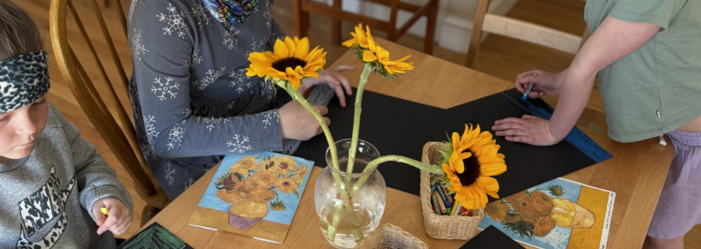
If your child fills sketchbooks, gravitates toward any material they can shape or color, or has been called "the creative one" for as long as you can remember, this week gives that instinct somewhere real to go! This isn’t a typical arts-and-crafts program, but a working studio led by a teaching artist who brings their expertise to share with children.
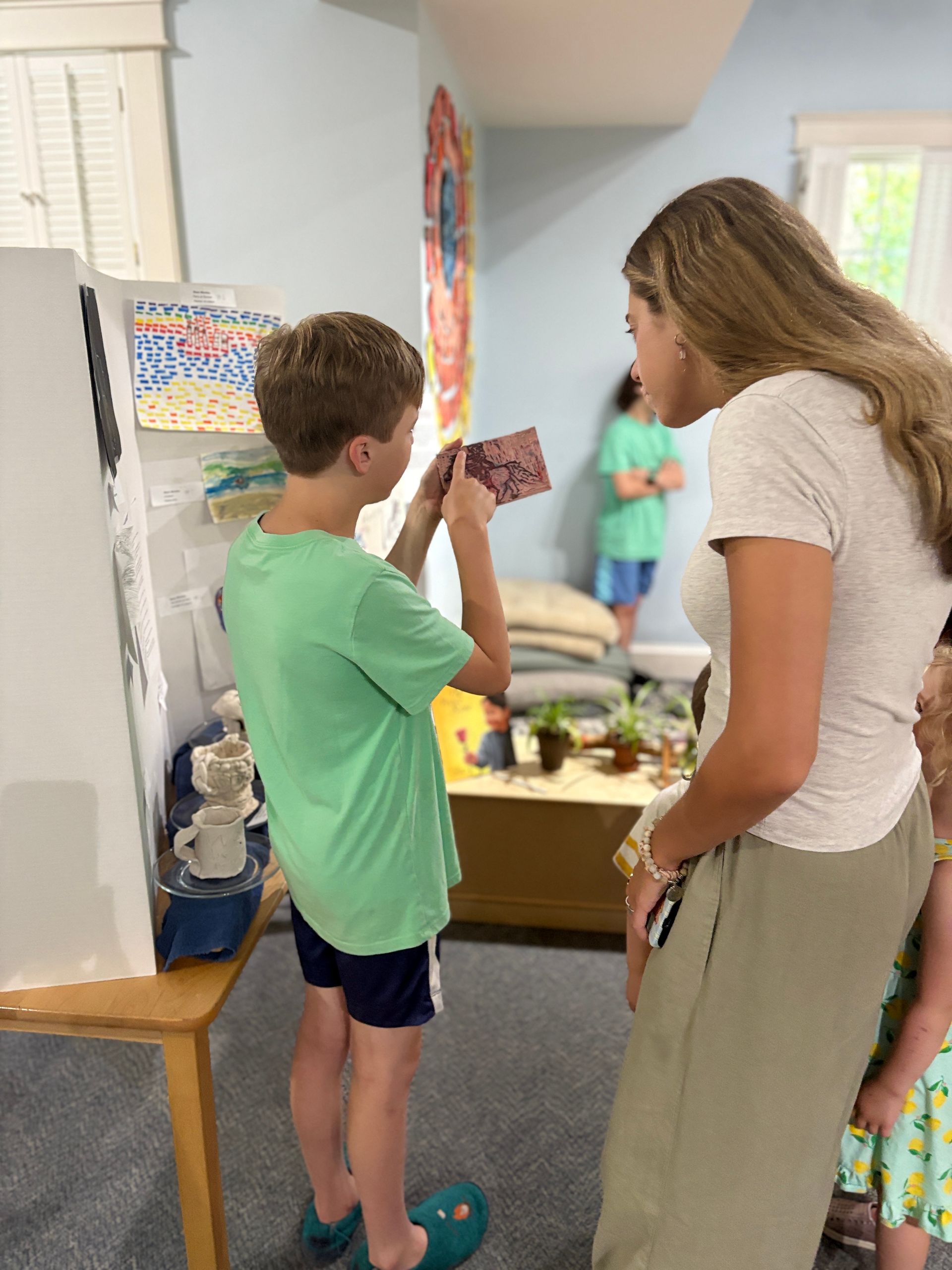
In Create Like an Artist, children work across watercolor, printmaking, and mixed media, building a portfolio over the course of the week that reflects genuine artistic decision-making. The work is also for the child who doesn't yet think of themselves as artistic or the one who is curious but hasn't been given the right instruction or the right materials. That child often surprises everyone, including themselves!
Ceramics are part of the week, too. Because pieces require glaze firing after the session ends, the ceramic work is mailed to your family within ten days, arriving as a small, unexpected reminder of the fun they had.
Your child takes home: a portfolio of original work in watercolor, printmaking, and mixed media, plus a fired ceramic piece mailed to your family within ten days of the final day.
A good fit for children drawn to making things…whether they already identify as artists or are still finding their way there.
Broadway Builders: From Folktale to Original Production
July 6–17 (two-week intensive) · Ages 7–14
This one is for two kinds of children, and they both belong here.
The first is the child who performs everywhere - at the dinner table, in the hallway, in the back seat of the car. The one who voices every character when reading aloud.
The second is the child who is endlessly fascinated by how productions come together - who would rather figure out the blocking, design the set, or direct the scene than step into the spotlight themselves. Broadway Builders is built for both.
The group begins with a folktale on the first day of Week 1 and ends, two weeks later, with a live performance for families. In between they’ll explore adaptation, blocking, costume and set design, rehearsal, and the specific kind of concentration that comes with pulling off a live performance.
Theater artist Caroline Williams leads the production, and builds it with the children, not for them. Every child has an ensemble role that is genuinely theirs.
This is the only week in the lineup offered as full immersion only, and it requires a two-week commitment. The work builds continuously across both weeks toward a single performance on July 17th. Families should know going in that the arc is what makes it work, and that the performance on the final day tends to be the kind of thing families won’t ever forget!
Your child takes home: an original ensemble role in a live theater production, performed for families on the final day of the program.
A good fit for children who love storytelling, performance, or any part of how a production is made - onstage or behind the scenes.
Stitch, Dye & Design: A Sustainable Textiles Studio
July 20–24 · Ages 7–14 · Capped at 12
If your child notices what people wear, has strong opinions about color and pattern, or has ever taken apart a piece of clothing just to see how it was made - this is their week. It's also for the child who is tired of things being disposable, who would rather fix or transform something than throw it away.
Stitch, Dye & Design is a small, boutique week by design. The dye bath and sewing stations require patience and close attention that isn’t suitable to large groups. Capped at twelve children, it runs closer to a working studio than a classroom.
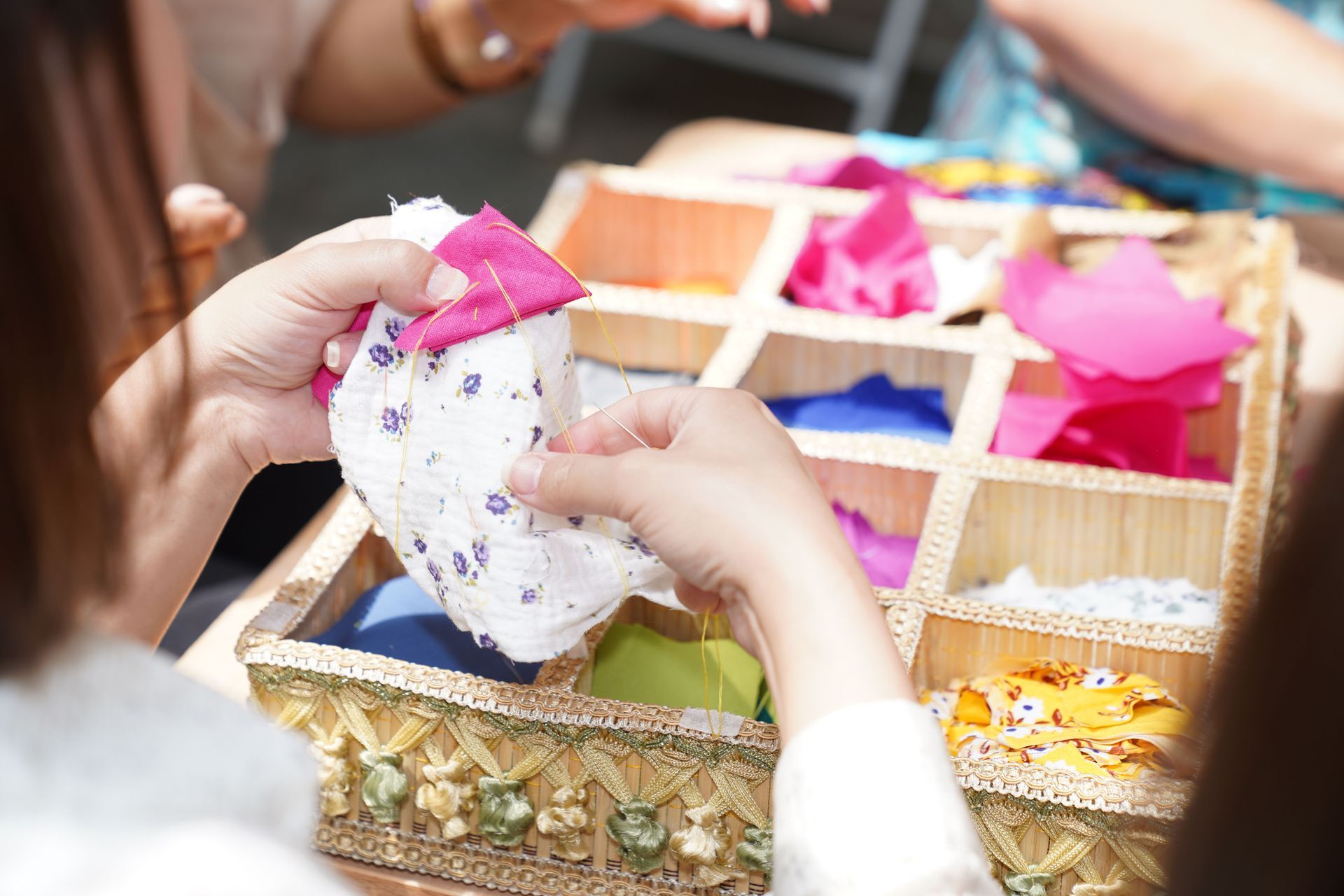
Children learn natural dyeing, including why color behaves so differently here than in synthetic materials, and build real hand-sewing skills. Families are asked to bring a garment from home that needs a second life. That piece is transformed by the end of the week! The design journal that goes along with the learning asks children to articulate what they decided and why, which turns out to be as challenging as the making itself.
Your child takes home: a hand-sewn primary project (pouch, tote, or wall hanging), an upcycled garment, and a design journal.
A good fit for children who like working slowly and intentionally, who care about materials, and who are ready to make something that will last.
Inventors Arena: The Young Engineers Studio
July 27–31 · Ages 7–14
If your child takes things apart to see how they work, and sometimes puts them back together differently, this is the week for them. The same goes for the child who asks "why doesn't someone just make a thing that does X?"
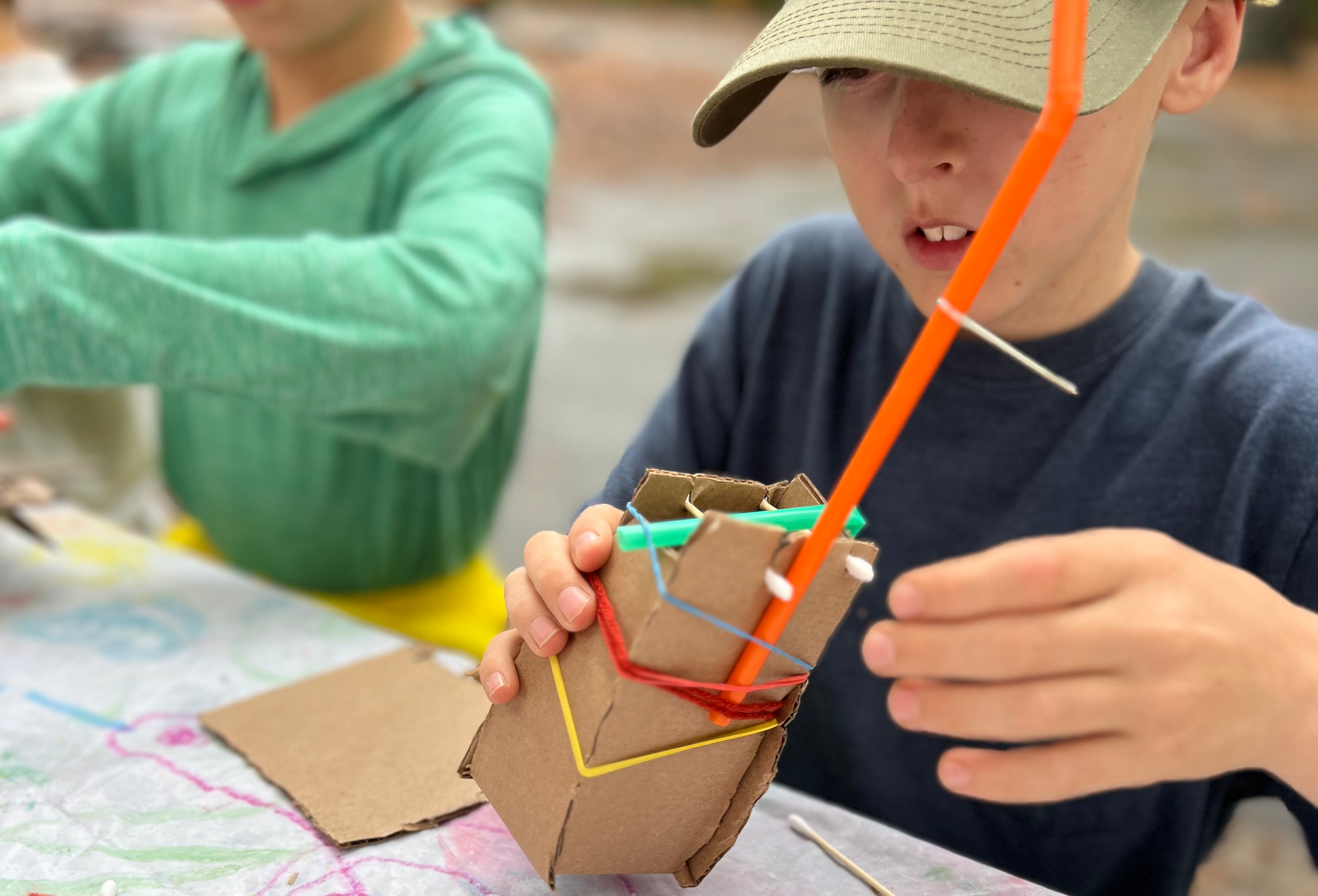
Inventors Arena is a hands-on engineering and design week led by Maddie, an SMS STEM teacher who knows both how children think through problems and how to structure lab work that builds real habits of mind. Children spend the week designing, prototyping, testing, and revising - moving through the full cycle of an invention.
By the end of the week, each child has developed an original invention, documented the design process in a journal, and completed a patent document. They’ll leave the week understanding their own thinking in a way that they didn't before.
Your child takes home: their best prototype from the week, a completed patent document, and a design journal.
A good fit for children who are drawn to how things work and who come alive when given a real problem and the freedom to solve it their own way.
From Farm to Table: Grow, Harvest & Eat
August 3–7 · Ages 7–14
If your child reads the labels at the grocery store, asks where food actually comes from, or has been asking to help in the kitchen for years but usually only gets to stir, this is the week that gives them hands-on immersion in food! It's also for the child who is drawn to being outside, to soil and season and living systems, and who would rather grow something than be told about it.
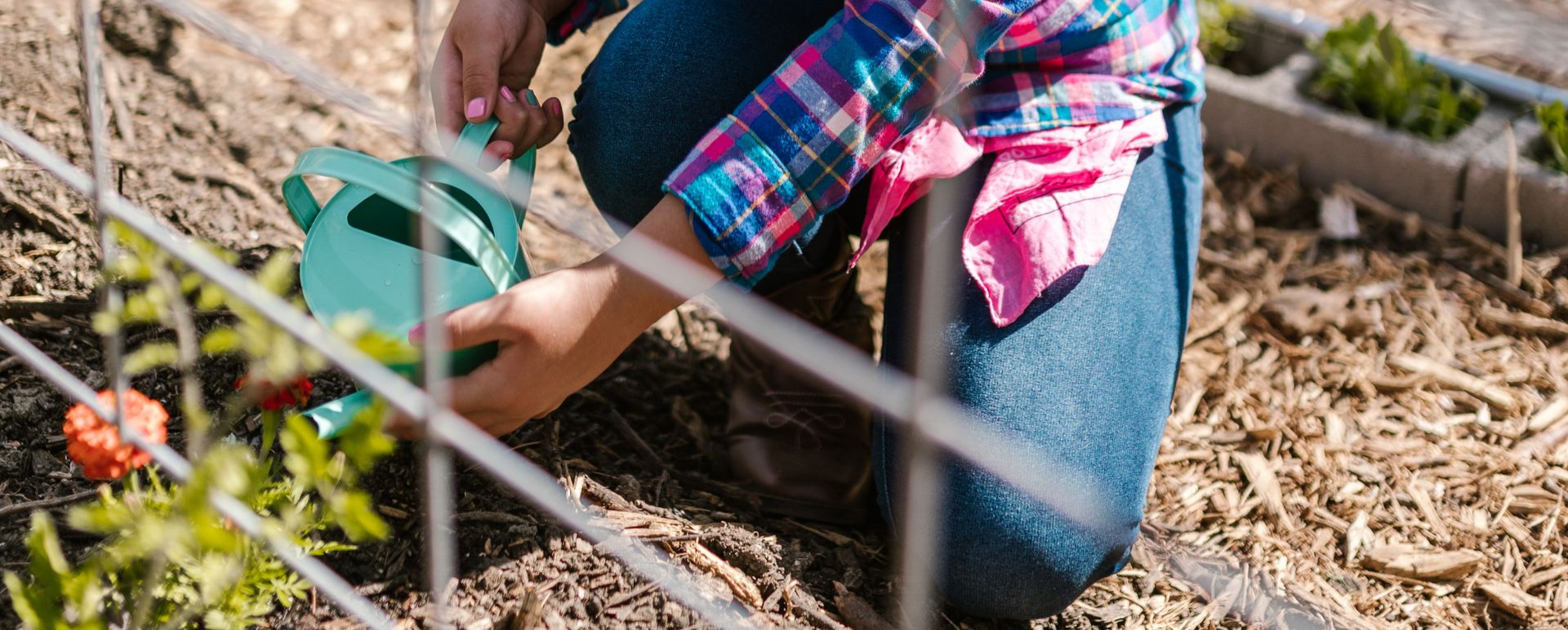
Children plant and tend microgreens, harvest from the garden, and learn to cook real meals from scratch using what they grew. The Cape Cod landscape is part of this week in a special way - soil, season, and what grows here aren't abstractions when you're working with them directly. The week ends with a community farm stand, where children share their productions with others!
Your child takes home: a small pot of microgreens they planted and tended, a jar of something they cooked from scratch, and a farm journal.
A good fit for children who are curious about food, nature, and the full story of where things come from.
What Every Week Has in Common
Every morning begins with the same opening ritual, a community greeting where every child is acknowledged by name, a brief revisit of the agreements the group made together on Day 1, and a content-specific warm-up that activates the thinking and vocabulary for the day.
Every child gets a real job, such as materials manager, timekeeper, environment steward, set-up lead. They’re not intended to be chores, they’re more like responsibilities that mirror how professional practice in each domain actually works.
And every week ends with a tangible artifact that kids can take home to show what they learned, made, or built during the week!
How to Sign Up for Summer Camp at Sandwich Montessori
Space is limited, so we encourage families
to register as soon as possible to ensure they’re able to enjoy their preferred themes.
If you're looking for a summer camp on Cape Cod where your child spends a week working alongside a real expert, makes something they're genuinely proud of, and comes home with a visual representation of their learning, the
2026 Summer Elementary Program at Sandwich Montessori is ready to welcome you and your child!
Frequently Asked Questions
What ages is this Cape Cod summer program designed for? The Sandwich Montessori School Summer Elementary Program is for children ages 7–14. Every week is structured as a mixed-age environment where older and younger children work alongside each other, mentor one another, and learn together. If you're looking for camp for younger children under 7, checkout our
summer of fun for 0-6.
Do children need prior experience to enroll in a specific week? No. Each week is designed to meet children where they are. A child who has never held a needle can enroll in Stitch, Dye & Design. A child who has never touched Minecraft can enroll in Minecraft Masters. The work scales across experience levels.
Can my child enroll in just one week? Yes. Every week except Broadway Builders is a complete, standalone experience. Broadway Builders requires a two-week commitment because the work builds toward a live performance that both weeks are essential to reach.
Is this program available to families who don't attend Sandwich Montessori School? Yes! Summer programming is open to all families, including those whose children attend other schools during the year. Homeschool families are especially welcome - many of the themed weeks are well-suited for children who thrive in hands-on, project-based environments.
How is this different from a typical Cape Cod summer camp? Each week is led by a named expert in that domain (a practicing teaching artist, a theater director, a STEM educator etc) rather than a generalist counselor. The emphasis is on learning and fun as they use real materials and end each week with a tangible artifact that demonstrates their learning.
How many children are in each week? Enrollment caps vary by week. Stitch, Dye & Design is capped at twelve to protect the quality of the studio environment. Minecraft Masters accommodates up to twenty, with a dedicated workstation per child. Broadway Builders requires a minimum of eight to run and caps at fifteen.
When does enrollment open and how do spots fill? Weeks fill based on capacity, and several of the smaller weeks (particularly Stitch, Dye & Design and Broadway Builders) have limited spots. Families are encouraged to
reserve early.
Sandwich Montessori School is located on Cape Cod in Sandwich, Massachusetts. The SMS Summer Elementary Program serves children ages 7–14 and runs June through August 2026. Individual weeks are designed as standalone experiences; families may enroll in one week or build a personalized summer schedule across multiple sessions.