In Support of Spoken Language
Our children’s early years are essential for developing strong language skills. So, in Montessori, we pay particular attention to how we support young children’s receptive and expressive language development.
The exercises we use to enhance children’s spoken language development don’t have a large physical presence on the classroom shelves because many are games or conversations. But the integration of these spoken language activities into a prominent part of children’s daily experience in our Montessori classrooms.
The Purpose
Young children are expanding their vocabulary at an astonishing rate: from recognition of about 50 words at age one, to about 1,000 words by age three, to at least 10,000 words by age five! We know that children absorb language effortlessly, so in Montessori we provide children with expansive vocabulary enrichment through a series of mindful oral language exercises.
We also recognize that the adult is the most important language material in the classroom, so we use precise language whenever we are communicating with children. We offer rich, full, and beautiful language because we know we are providing an essential foundation for children.
Our Favorite Activities
We keep oral language alive and lively through a variety of purposeful activities.
Classified Picture Books
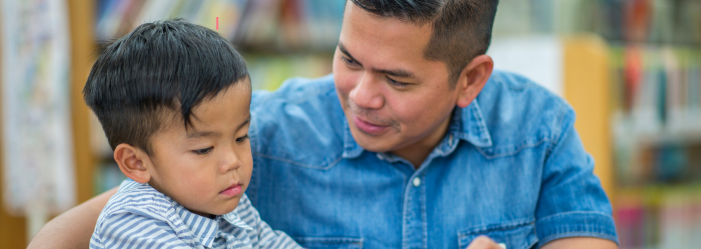
We choose wordless picture books that focus on a theme that is familiar to children or that are classified around a sequence (e.g., Amanda’s day). In the classroom, we sit down with one child and take a “picture walk” through the book to help the child interpret the picture clues. The adult doesn’t tell what is happening and rather asks the child about what they see. This process not only helps children develop their expressive language skills but also sets the stage for future reading and story interpretation.
True Stories
When we tell true stories, we invite a group of three to five children to join us. Sometimes we use little cultural artifacts or objects as we share stories about everyday life, or we offer little snippets about geography, art, music, biology, and geometry. The key to these stories is that they are based in reality and are not fictional stories. In sharing these stories, we offer children interesting and rich language, as well as spark their interest and imagination!
The Question Game
For this activity, we gather a small group of children who have a common experience. Then we ask a series of questions about that event. Being mindful to solicit answers from a variety of children, we focus on asking questions that can form a sequence and illuminate details. We then summarize the story based upon the children’s responses.
Because children live in the moment and often don’t remember what happened yesterday, we try to do this activity on the day the common experience occurs. In addition to modeling how to tell a story and how to create complete sentences from one-word answers, we are also providing preparation for creative writing by taking an event and structuring it sequentially and highlighting details.
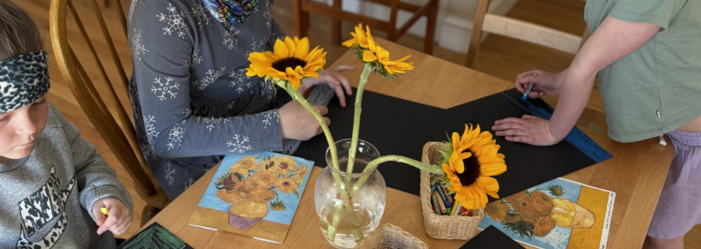
Conversation at a Picture
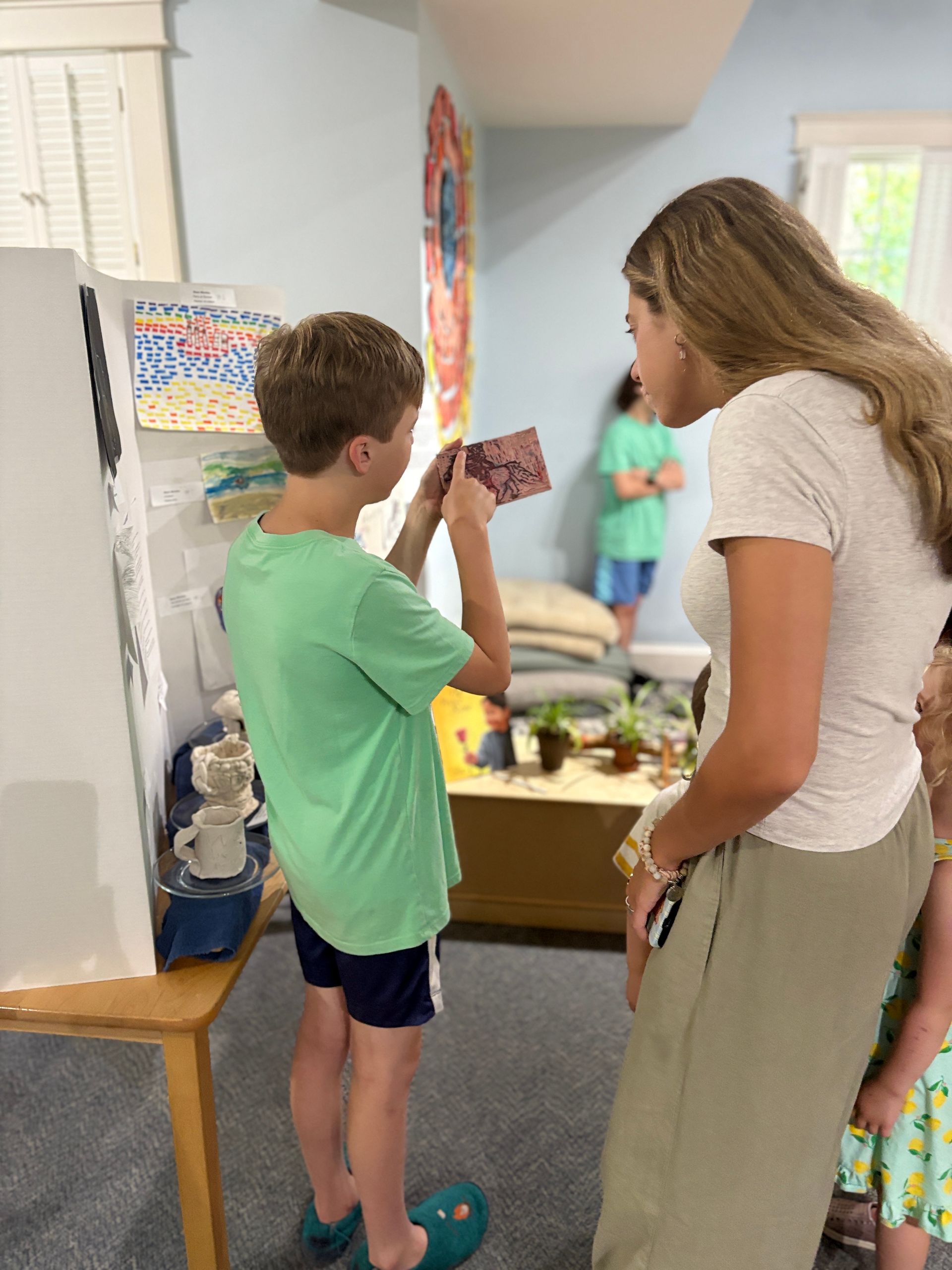
To engage children in this activity, we invite a small group to a piece of artwork on display and start a conversation about what the children observe in the picture. We focus on using “w” questions such as: What do you see? Where do you think they are? Why do you think…etc. We keep eliciting conversation by asking more questions: Do you see anything else in this area? Do you notice anything else about this scene? When the conversation begins to fade, we summarize the observations in a small narrative or story.
Reading Literature
We work to read quality children’s literature every day! When we do so, we highlight the book’s title, the author, and the illustrator. Under the age of six, children live in the present and are trying to adapt to the world around them. Because they are still too young to distinguish between fantasy and reality, we make sure to choose books that are grounded in reality.
Reciting Poetry
When reciting poetry, we do so from memory. We recite poems over a series of days and, just like with singing, children learn the poems by themselves and love to recite them. Children also absorb phonetic skills from any onset rhyme. Popular nursery rhymes support children’s process of learning to read!
Objects in the Environment
This activity is actually a series of games that follow a “listen and do” type format. After gathering a group of children, we explain that will say something to do and when a child hears their name, they get to do that action. We start with simple, one-step commands: Touch a shelf. Stand by a window. Walk around a table. We then progress both in complexity in terms of the types and categories objects as well as by offering double commands: Find a friend and shake hands. Choose a book and place it on a table. Play a bell and hum a tune. While quite fun, these games also have the added bonus of helping children develop their auditory memory.
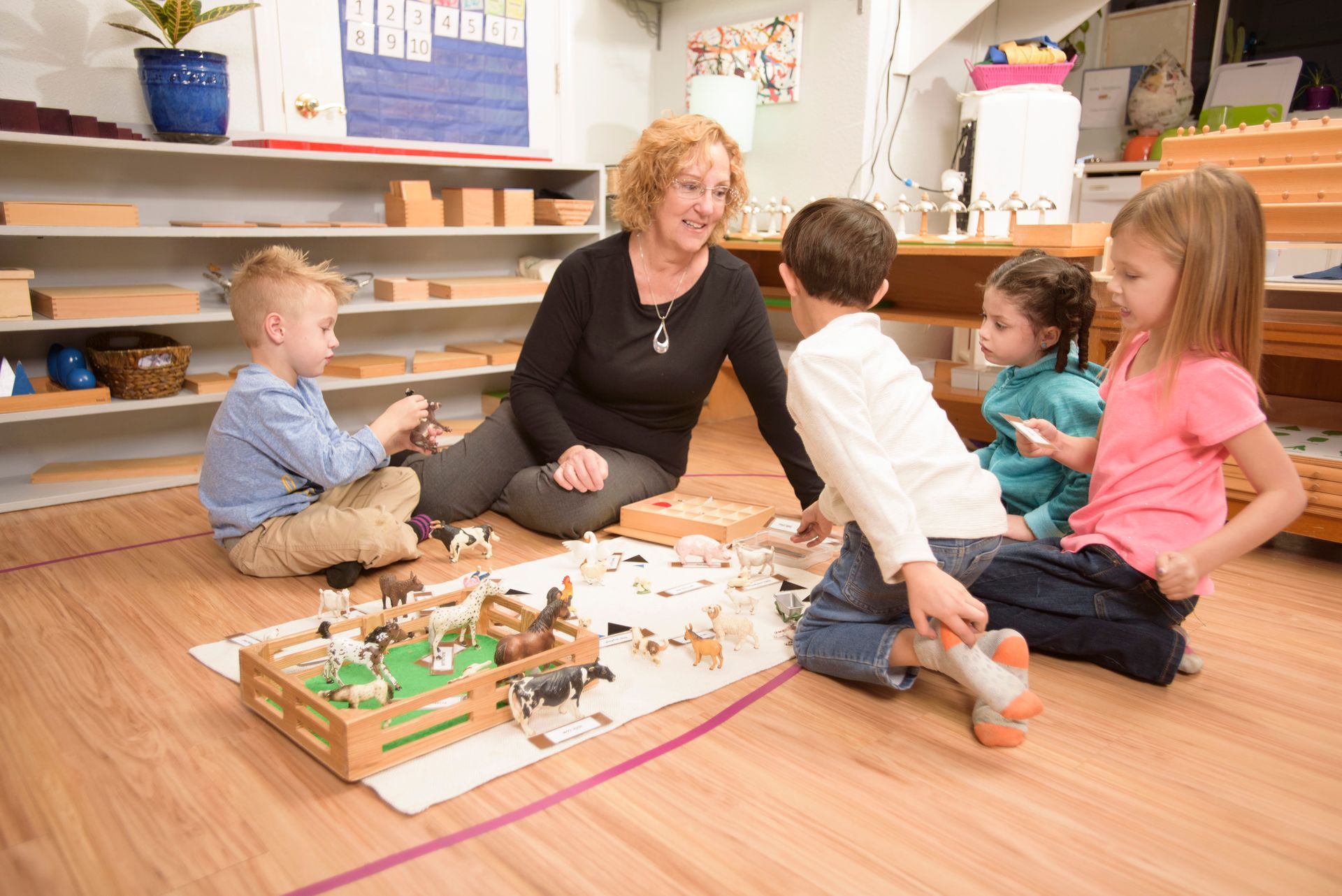
Classified Pictures
For this work, we have collections of pictures representing categories of objects (types of transportation, furnishings, appliances, playground equipment, etc.), as well as cards with illustrations of geographical, geometrical, biological, and scientific terms (parts of a flower, land and water forms, polygons, etc.). When doing this activity with a child, we first name the classification (“These are all fruits.”) to help establish mental order. Then we play a little game to teach the vocabulary for the items pictured on the cards.
The Sound Game
The sound game helps children become aware of the phonemes in our language. We collect ten known objects on a tray and play an I Spy type game that isolates the beginning sounds of the objects, then later the ending sounds, and eventually the sounds in the middle of the words. The whole purpose of this game is to help children become aware of the sounds that make up words.
Spoken language activities are the foundation for children’s receptive and expressive vocabularies. In addition to enhancing their vocabulary and providing an overarching structure for future work in writing and reading, engaging children in language games also helps increase their listening and comprehension skills. Above all, we take the time to listen to children’s own spontaneous efforts to express themselves, so that they gain confidence in speaking and feel that their thoughts have meaning.
Come see (and hear!) all this spoken language work when you schedule a visit. We love to share what we do!